Traveling to Oaxaca
-
I walk through the markets daily, I move through the city at night, and I've never felt unsafe in the way people sometimes imagine when they ask this question.
Oaxaca is home to hundreds of thousands of people who live ordinary lives, shop, eat, celebrate. Like any city, it has neighborhoods you move through differently than others. Tourists who stick to the main areas: the markets, the centro, known restaurants move around with the same awareness they'd use anywhere. -
If you're coming for a class with us, most students stay downtown near the zócalo. Both are walkable, full of good food, other neighborhoods are quieter and more residential. The centro is more animated with markets, galleries, restaurants, the energy of the city. Some people want to be in the rhythm of the city. Others want a quieter base. Both are right, depending on what draws you to Oaxaca.
-
Start at Central de Abastos, touring the market with us. You need to see it, smell it, taste it. Walk through the centric neighborhoods and look at the textiles and ceramics in the shops and galleries. This is where local artists and weavers sell their work. Visit the Textile Museum if you want context for what you're seeing. Eat at Levadura de Olla or Doña Vale's for memelas. Sit in the zócalo and watch the city. If you want archaeology, the Rufino Tamayo Museum has pre-Hispanic pieces. If you want to understand Día de Muertos, join us for a food tour. Just outside of the city, there are villages and magical places from archelogical sites to the biggest tree in the world.
-
Mole: The state makes more varieties of mole than anywhere else in Mexico.
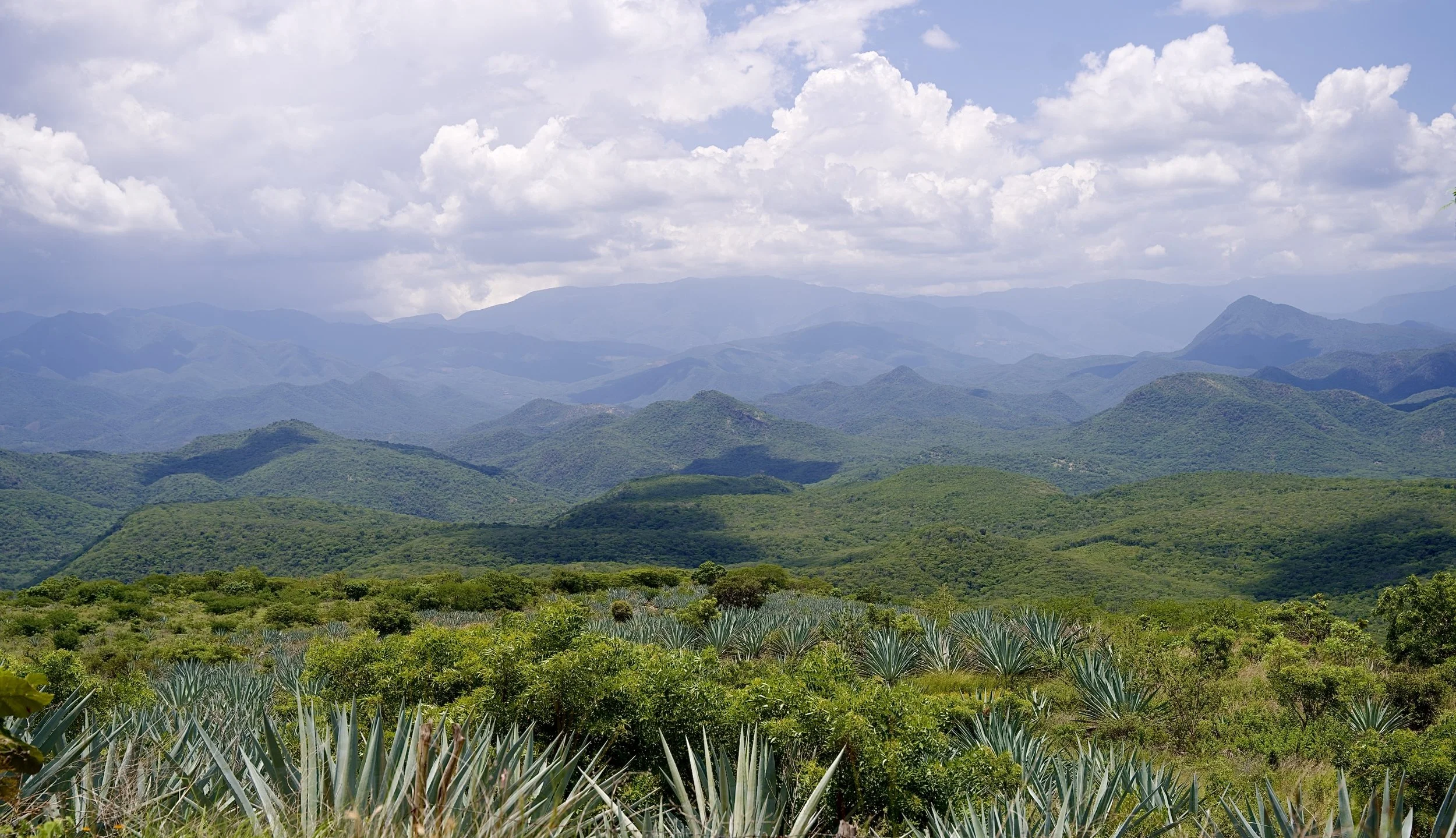
Mezcal: The spirits come from the agave hearts roasted in earthen pits in villages like Santa Catarina Minas.
Textiles: The weavers in Teotitlán del Valle and throughout the valleys make rugs and cloth in patterns passed down through generations.
Markets: From Central de Abastos is one of the largest markets in Mexico to charming village markets.
Pre-Hispanic archaeology: There are ruins everywhere, Mitla, Monte Albán, smaller sites in the villages.
The people: Oaxacans have a deep connection to their food, their traditions, and their land. That's what makes it different. -
Fly into from Mexico City (MEX - Benito Juárez International Airport). From there, take a domestic flight to Oaxaca International Airport.
Driving takes about five hours and the drive through the mountains is beautiful.
If you joined us for a food tour, once you land in Oaxaca, we arrange transportation to and from your hotel and to the cooking school and other activities arranged by us. -
Use a taxi or a car service.
Colectivos (shared minibuses) are how locals move around and they're cheap, but they take their time and can be confusing if you don't know the routes.
If you're comfortable driving, you can rent a car. We provide transportation to and from the cooking school for our students. For exploring the city on your own, a taxi is easiest. Agree on the price before you get in, or use a ride app if you have data on your phone.