It's called quesillo, not string cheese
People call it queso Oaxaca outside Oaxaca. Here in Oaxaca, we take huge pride correcting people, telling them it's called quesillo.
But in Oaxaca, we make many styles of cheese from cow milk, but nothing more celebrated than these three: queso fresco, quesillo, and requesón.
These cheeses are made all over Oaxaca, but the most notorious comes from Reyes Etla, a village 30 minutes north of Oaxaca City and 15 minutes from our cooking school. Our dear friend and cheese maker Doña Silvia has made them here for more than 50 years.
The secret to these three cheeses is unpasteurized milk. I lived in the USA for 12 years, and I came across some friends called the FDA. They sure don't like this idea. But in Mexico, we do what we want, so here is the process…
Once we have the warm milk, we add some liquid rennet to it. This will make it coagulate within minutes. Once it sets like a panna cotta consistency, we carefully break it and strain it, separating the curds from the whey. The curds are left with a small amount of liquid to ferment for 24 hours. This is to make quesillo.
For queso fresco, we have to take all the moisture out of it. We continue straining it until all the whey has been removed. It is then mixed with salt and placed into a round mold, made out of palm, sometimes wood, and lastly a conventional PVC sliced into rings. The cheese is creamy at first and eventually it starts setting. As time passes, the cheese will solidify where we can cut this in slices or cubes like pie. This cheese never melts and is usually crumbled on top of antojitos, enchiladas, guacamole, and many other dishes.
The whey that is left over is usually reboiled to make requesón, our Mexican ricotta. This is usually a creamy cheese used for desserts or savory dishes.
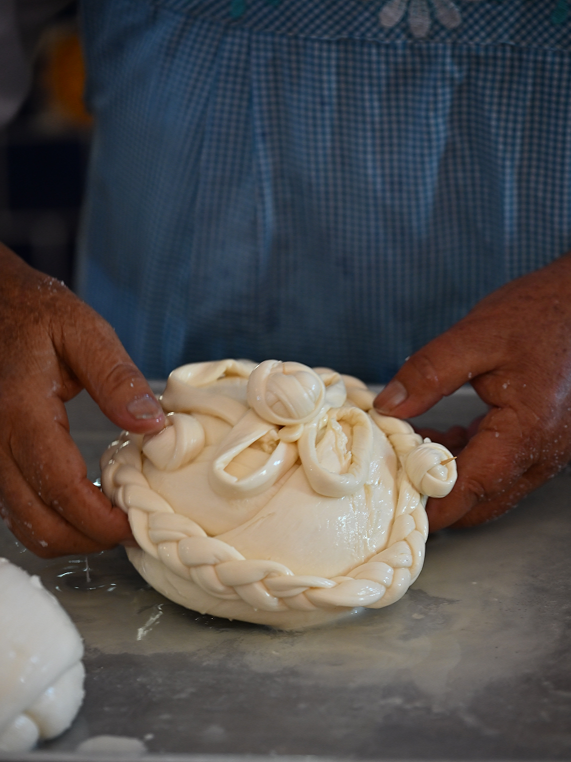
For the star of the show, quesillo: we take the 24-hour fermented curds and put them in a bowl. We then add hot water to start melting the curds and make a smooth dough. Once smooth, we add more hot water and start stretching this with the same width and thickness. Once we have pulled as much as we can, we place it on a table or sheet tray to allow it to cool down. Once it's cooled, we add a generous amount of salt. This is where we finally season the quesillo. Then another very technique-driven process comes in: the rolling of quesillo. Usually, it is rolled into a ball that eventually will give us a flower or rose pattern. Then it's set aside to rest and it's ready to eat.
During our Discover Oaxaca, Día de Muertos, and Chef's Intensive tours, we have Doña Silvia come to the cooking school and do this amazing demonstration for us. Or if you find yourself in Oaxaca and want to do a specialty class, we offer the cheese class too.
Con cariño, Kaelin