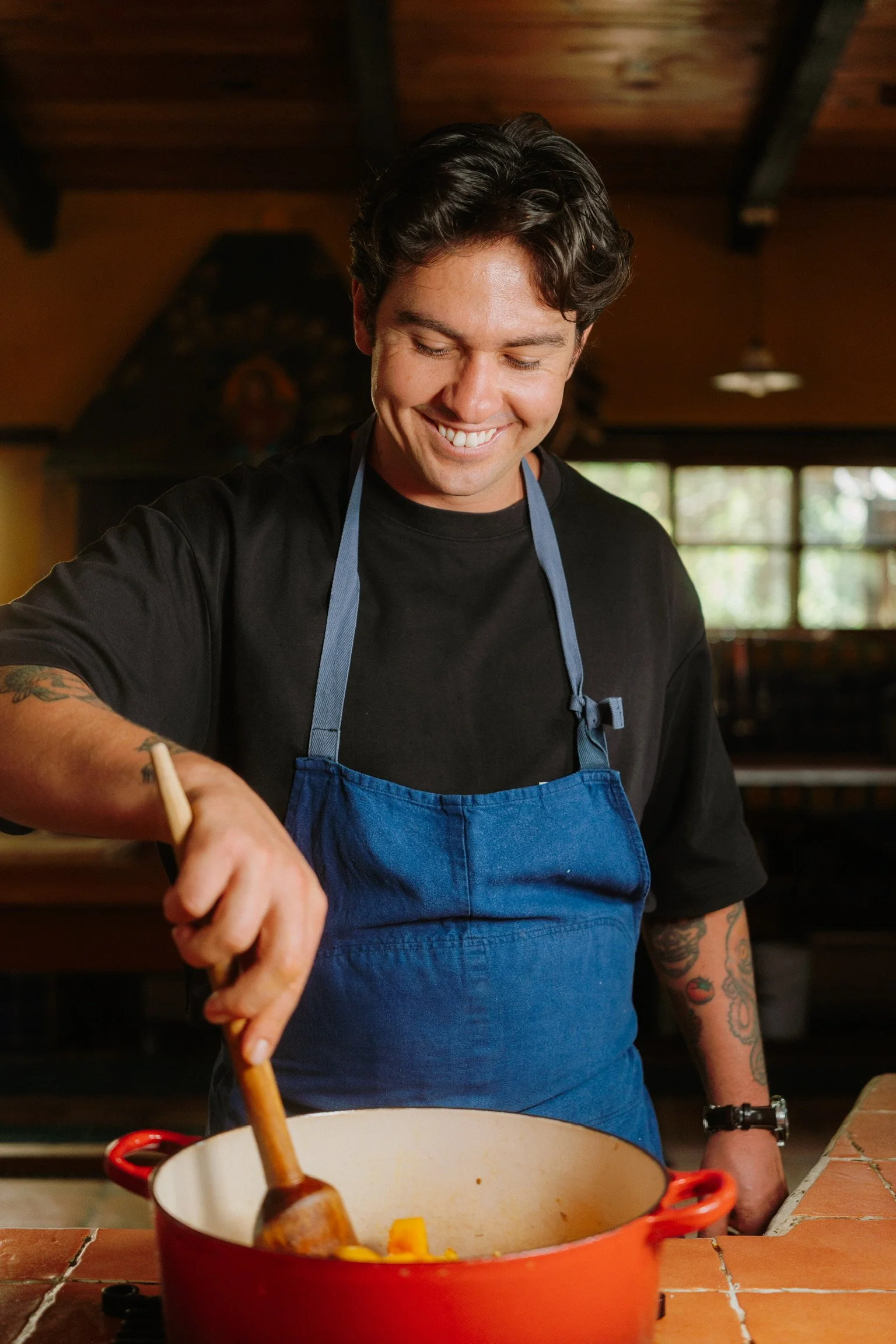
Memories of Mole Verde — Recipe
During the Chef’s Intensive, we cooked mole verde and that brought a lot memories about the particular mole. I’ll start at the beginning… in Oaxaca, we have many moles, one of the seven classical moles is mole verde. It is a mole where all ingredients are fresh, it is a vibrant, tangy flavor that is very easy to eat more then once a week. Here it has many variations, but as you go north towards Puebla, mole verde is done with pumpkin seeds, sesame seed and many other greens in it, called mole verde de Quilitongo, quite different then the mole verde made in Valles Centrales.
The traditional mole verde de Valles Centrales is done with: green tomato, tomatillos, jalapeños, garlic, hoja santa, parsley, epazote and fresh masa. Often served with heirloom white beans and pork or chicken.
Growing up in the cooking school, we ate whatever my mom was making. At the end of the day, sitting at the table with people I didn't know, together with Jesse, my mom and dad. Breaking bread together. That's where I remember so many flavors, and mole verde too.

Mole verde made during the last Chef’s Intensive
But when I was eighteen, I left home and moved to the USA to start working in professional kitchens. San Antonio first, where I was cooking in a hotel different cuisines like: New American, French and Italian cuisine, so no Mexican at all. When I tried to eat Mexican food it was the glorious Tex-Mex! I really did grow a love for flour tortillas and smoked long-cooked meats. But nothing like home.
Three years later I found myself moving to Houston to open a Mexican seafood restaurant with a good friend of the family, a James Beard winner Chef Hugo Ortega. When I got there, the restaurant was still being built. I started working at Hugo's for three months. This restaurant is one of the best Mexican restaurants in the USA. There I felt like I was back home. Hand pressed corn tortillas made with fresh masa, a series of antojitos, meats cooked in a barbacoa setup, carnitas, lechón, mixiotes, chile relleno. It was like Mexico was in Houston. The entire kitchen staff was Mexican and South American. Felt amazing. I spent almost three years in Houston then I moved to Tennessee, then London, then New York. I worked in some restaurants and opened Oxomoco in Greenpoint, Brooklyn. Each kitchen was good. Each one taught me something. Toward the end of summer of one of these years, the Jefe, the boss, the chef I always wanted to work for, approached me to open a Mexican restaurant in Napa Valley. Chef Thomas Keller. Felt like a dream!

Photoshoot of dishes for the menu at La Calenda with David Escalante
When I moved there and started working on the R&D of the dishes for the menu, one of the entrees was mole verde. When I made it and tasted it, it did taste like my childhood memory. Eating mole verde in Napa after many years felt like I was back home or the other way around… I brought a piece of Oaxaca with me to Napa.
And how that mole came to life in Napa Valley is a story of its own… to make mole verde we needed hoja santa. So the head of the TFL garden grew it for us next to their greenhouse. Turned out to grow huge!
The mole verde we served at La Calenda came with Rancho Gordo white beans and pork jowl cooked for twelve hours, making it incredibly tender. Garnished with greens from the French Laundry Garden and of course tortillas. We had other moles on the menu too: mole negro, mole amarillo and mole chichilo. Definitely felt the Oaxacan cuisine there.

Did I say the hoja santa grew huge?

The French Laundry Garden with a fragrance of Oaxaca
Today back in the cooking school continuing the tradition of making all the seven moles from Oaxaca that my mom started. It excites me to continue cooking these flavors and all kinds of moles that were taught to my mom from many amazing people from around Oaxaca, and that she then taught me. Below, I’m sharing how we do it at the cooking school, more than a recipe with specific quantities, cooking mole is all about process.
All the best,
Kaelin

The mole verde served during my time in Napa
Read along for every step of the process – this is how mole verde is made:
FIRST
Mole verde is done with nothing but fresh ingredients. We take the tomatillos to poach lightly in boiling water, then we take them out and blend them with garlic, onion, green tomatoes and jalapeños that have been seeded and deveined. Once that's blended for a long time, this is our number one puree, which will be the chile tomato puree.
SECOND
Separate from that, we have fresh masa blended with the stock we're using for this case. We're going to use pork stock for this mole and that's blended and set aside.
THIRD
The third is the herb mixture, which is the flavor and also the bright green contrast that it gives to this mole. The herbs that are blended are hoja santa, epazote and parsley. We take the stem off the hoja santa and we use the leaves of all three and all this together gets blended with a little bit of stock. Now you have the three purees.
FOURTH
Now it's time to cook. We take a cazuela pot, add some lard to get smoking hot, then we fry the chile tomato paste. We're going to fry this for at least fifteen to twenty minutes until that raw flavor comes out of the garlic, the onion and jalapeño. Then we're going to constantly check if the mole needs a little bit more stock and we're going to add the masa. The masa is going to give it flavor of corn but also body. It's like our pre-Hispanic roux, and it is going to basically thicken the mole. Once it's added, it is very important we constantly stir so it doesn't scorch. This is going to give a nice body, and then continue adding stock if needed. We're going to add the vibrant greens that you have been blended.
FIFTH
When we add this, it is going to release amazing aromas from the hoja santa, the epazote, the parsley, and we're going to change the flavor drastically. This is going to cook for another ten to fifteen minutes, and we're going to check the stock if it needs more. We're going to add a little bit more stock.
Just remember, a mole is a mixture, a concoction of a harmonious balance in a classical world. One ingredient doesn't overpower the other, so you're constantly reducing and fortifying with stock.
SIXTH
Once we get to a point where we feel happy about the consistency and about the mole not tasting raw, you're going to start adding salt. We start adding salt together with the white beans that have been cooked with three ingredients: garlic, onion, epazote. This is added, and we then finish with more salt to make sure it tastes good and seasoned properly.
When we serve it, we serve it with poached pork ribs or pieces of pork, poached pork butt, any piece of pork that you prefer. It is incredibly vibrant and delicious. If you're serving it with fish or a seafood dish, use chicken stock, more of a neutral flavor, and just sear it and then place the seafood and then garnish it with the mole verde. Buen provecho!