
mole from oaxaca
A guide to the seven moles
and beyond
WHAT IS MOLE?
mole
the mother of all sauces
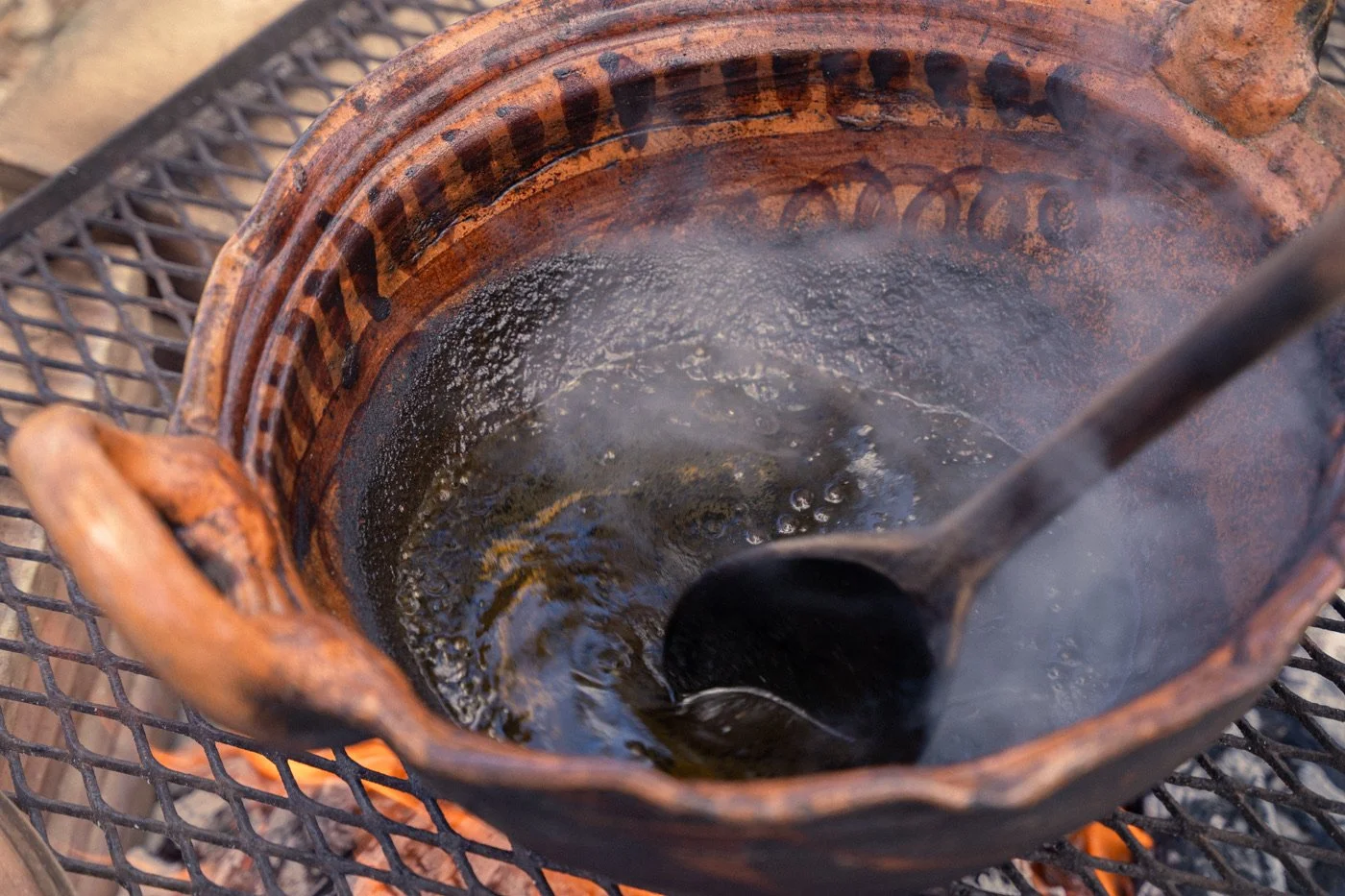
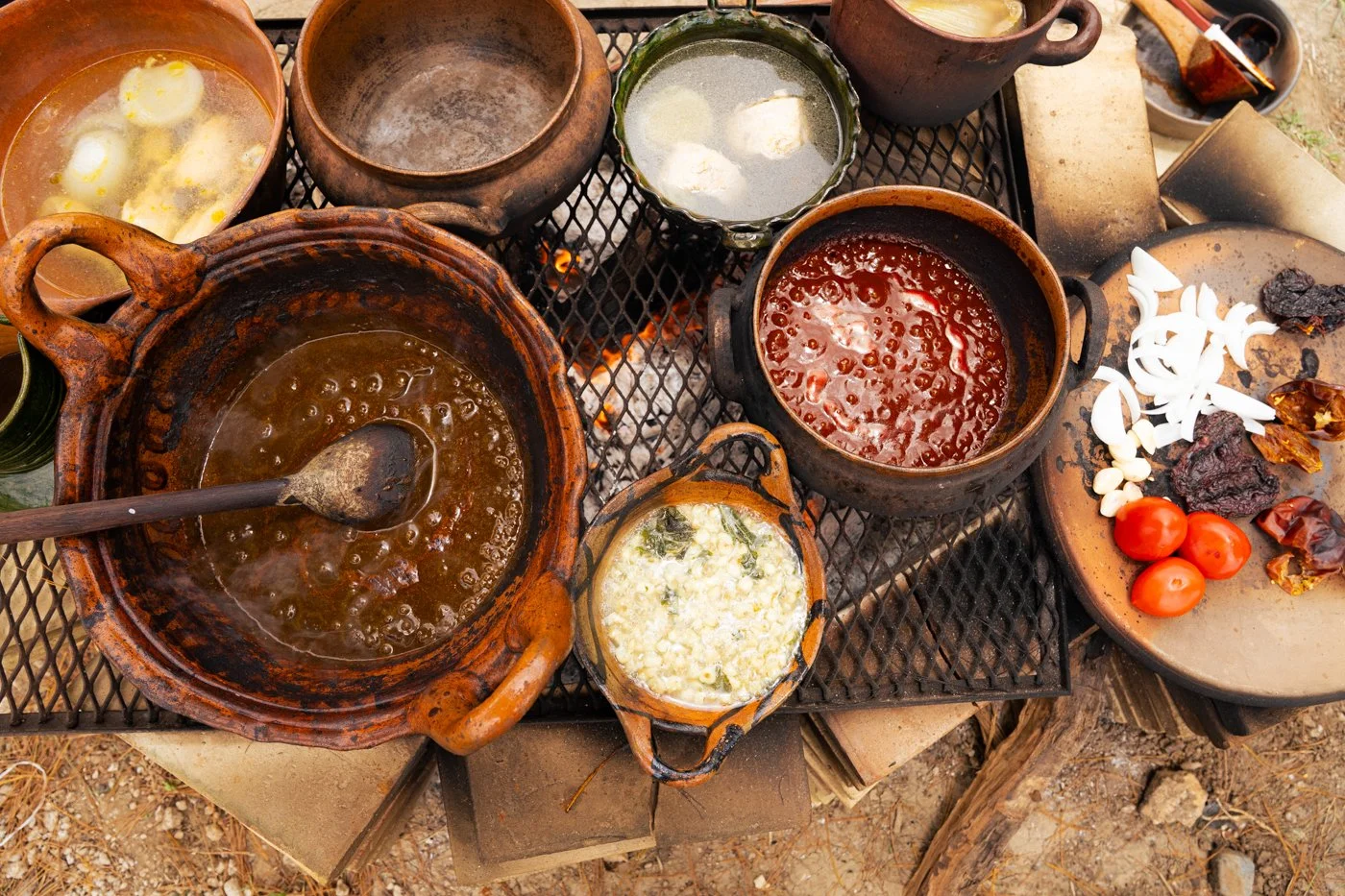
Mole is Oaxaca's most iconic dish: a complex sauce built from chiles, seeds, nuts, spices and sometimes chocolate, toasted and ground and simmered into something greater than its parts. Some moles carry more than 30 ingredients. Each family has its own version, prepared for weddings, festivals and everyday tables. Oaxaca is known as the land of the seven moles.
Our founder Susana Trilling wrote her first cookbook, "My Search for the Seventh Mole", as a homage to these seven moles and the occasions when they are prepared and eaten.
During our cooking classes and Oaxaca food tours, you will cook moles from scratch, taste them across markets and restaurants and learn the culture around this dish.
MOLE NEGRO
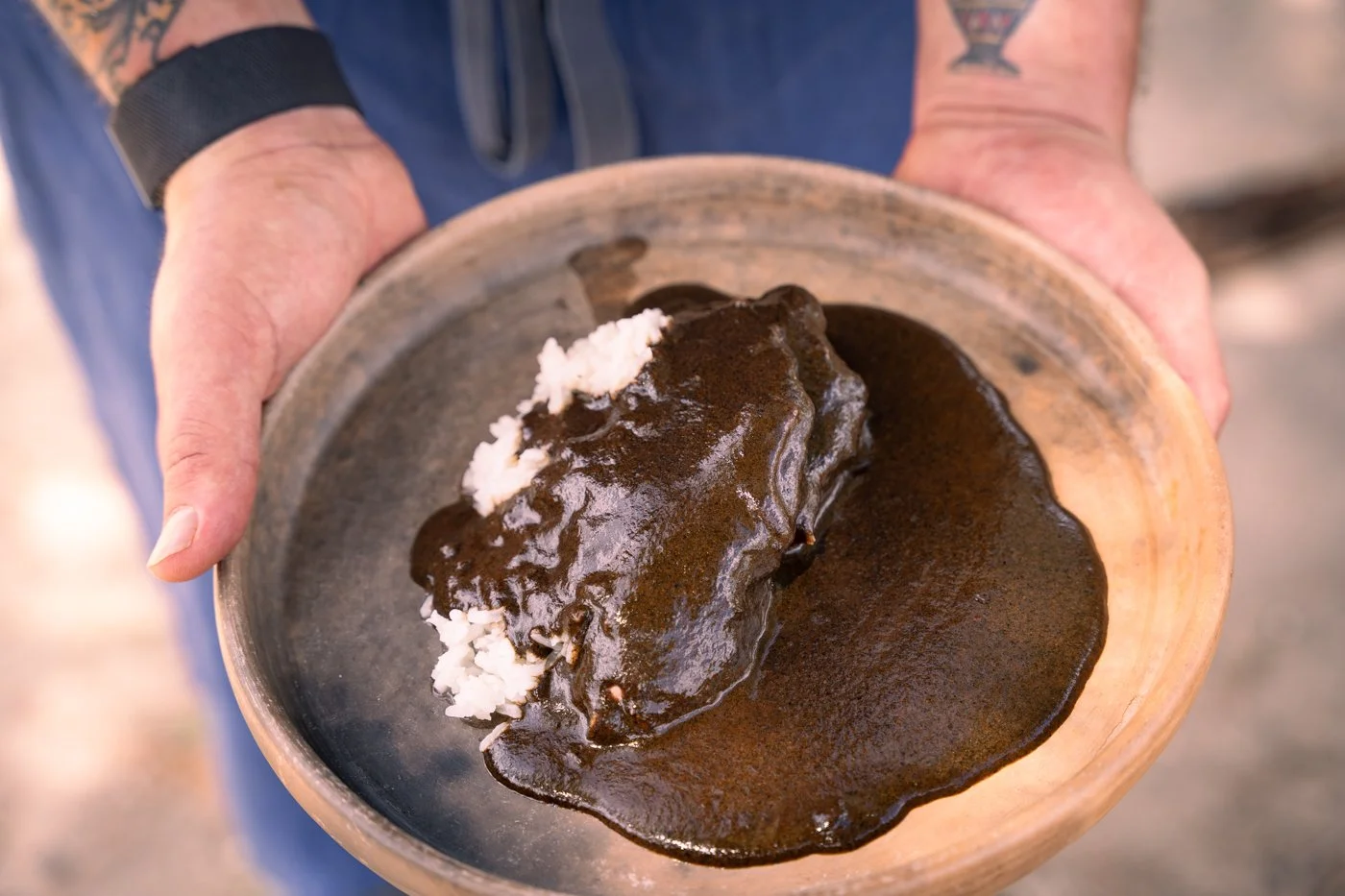
Mole negro is the most popular from the seven and the one saved for weddings and feast days. Its color comes from chilhuacle negro, a chile grown almost only in Oaxaca, charred until nearly black. It is then ground with nuts, seeds, chocolate and more than fifteen spices.
Read the article published by Food & Wine →
MOLE COLORADITO
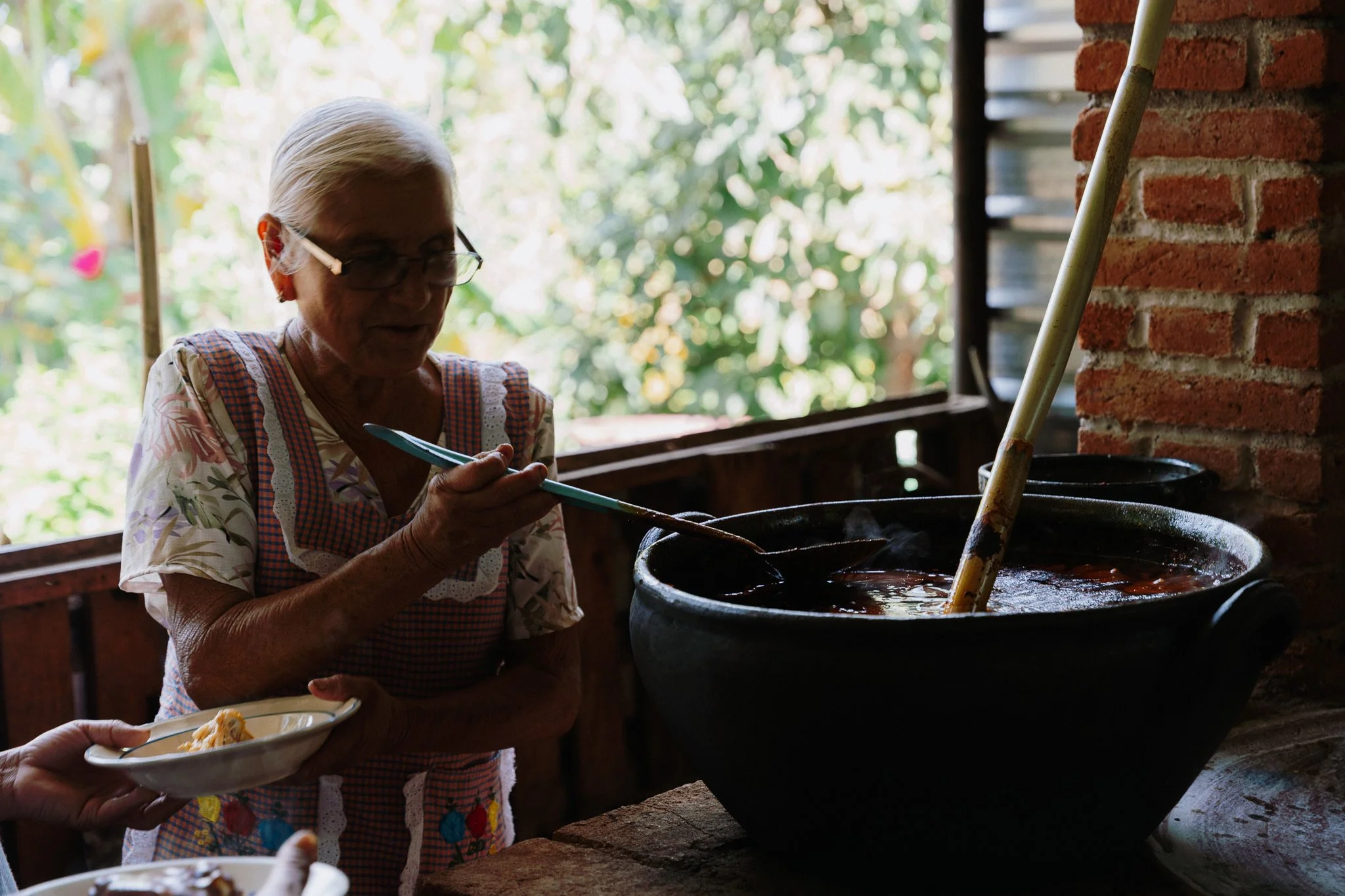
It is eaten daily throughout Día de Muertos and set on the altars. In Jalapa del Valle, our friend Doña Rafaela begins her coloradito three days before Muertos, stewing it slowly until the chiles, tomatoes and spices come together. Her family has welcomed our travelers to their table on November 2 for twenty-five consecutive years. There you eat her coloradito the way it is meant to be eaten: at home, among family, with live music, on the day the souls come back.
MOLE AMARILLO
Mole amarillo is a lighter mole, thickened with masa and perfumed with hoja santa. You find it all over the Valles Centrales. In Teotitlán del Valle it fills tamales wrapped in corn leaves. Outside the Ocotlán market it goes into empanadas, cooked slowly on the comal and served with pickled onions and pipicha.
MOLE VERDE
Mole verde is the freshest of the seven. It is made with tomatillo and green herbs such as hoja santa, thickened with masa and often cooked with pork and white beans. It depends on what is fresh that morning. Chef Kaelin brought this mole to Napa Valley when he cooked at La Calenda, with hoja santa grown in the French Laundry garden.
MOLE CHICHILO
Mole chichilo is the mole most people outside Oaxaca have never heard of. Charred chilhuacle gives it a deep, smoky flavor, and avocado leaf adds a soft anise note. It is mostly cooked at home and rarely found on restaurant menus.
MOLE ROJO
Mole rojo sits between negro and coloradito. It is darker and spicier than coloradito, but without the charred depth of negro. Dried chiles, tomato, seeds and a little chocolate give it its deep red color.
MOLE MANCHAMANTELES
Manchamanteles means “tablecloth stainer.” Ancho, guajillo and chilcostle chiles make the base and tomato gives it body. Then fruit is cooked into the sauce: pineapple and plantain. It is the only one of the seven that carries fruit, and its flavor sits between sweet and spicy.
SEGUEZA
Beyond the seven classic moles, every region of Oaxaca, and almost every family, has its own. Segueza is one of the oldest. Toasted and ground maíz does the work that nuts or bread do in other moles. The texture is coarse by design, and hoja santa adds a soft anise perfume. It was traditionally made with rabbit, before chickens arrived, and Zapotec families in the Valles Centrales still cook it today.
ESTOFADO DE BODAS
Estofado is the wedding mole of the Valles Centrales. Tomato, almonds and sesame make the base, with olives, capers and raisins that show the Spanish influence on Oaxacan cooking.
TASTE MOLE IN OAXACA
The best way to understand mole is to cook it and eat it where it comes from. On our tours you taste it in markets, restaurants and family kitchens. In our classes you make it from scratch, toasting and grinding every ingredient.